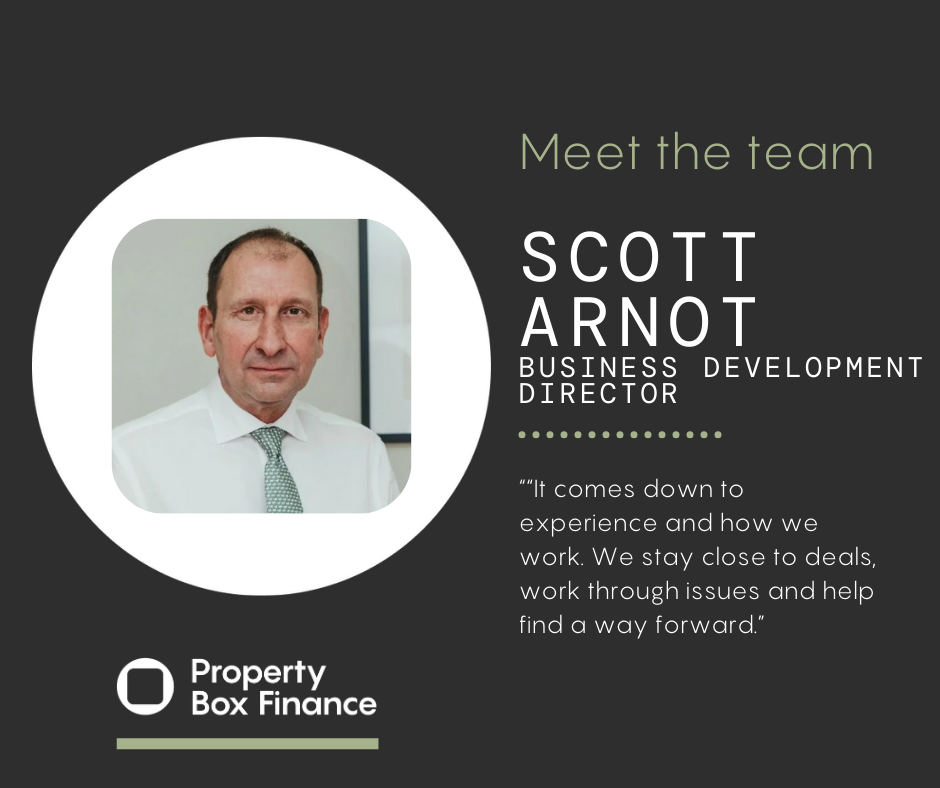
Meet the team: Scott Arnot
Business Development Director, Property Box Finance
Scott Arnot is our business development director at Property Box Finance. Read on to hear what he looks for in a ‘good’ deal, why strong sites can still slow down and where he thinks the market is heading in the next 6–12 months.
Q: What does your role at Property Box Finance involve day to day?
No two days are the same. One day I’m calling brokers looking for new proposals. The next day I’m lining up meetings for a proposed trip to Scotland. I also keep close to our live deals, speak to our current borrowers and meet senior banks. A lot of my time is spent looking at proposals and requests for mezzanine funding, whether they come from brokers, banks or developers we already know. My job is to bring in strong deal flow from good developers.
Q: What sort of residential schemes do you most enjoy working on and why?
I like getting involved early, when you can see the shape of a site and what it could become. The best schemes tend to come from people who care about the end-result. You can often see it in what they’ve built before. Strong spec, good detail and homes that sell well. A good track record matters. It tells you a lot.
Q: What makes a deal feel ‘right’ when you first look at it?
I’ll often look at the developer’s website before anything else. It sounds simple but it’s a great clue. You can see the sort of homes they build and the finish they aim for. From there, it’s about the basics. The site, the area, the numbers and whether the plan feels sound.
Q: What do you spot early on that others often miss?
Breathing room. If a scheme has no buffer on time or cost, it can get challenging. We also look at how real the sales plan is. Some deals look fine on paper but they only work if every week goes to plan. That’s rare.
Q: What’s the most common reason you see good deals slow down?
Sales. It’s harder to shift homes right now, so deals can take longer. That often means loans need more time. Interest rates, inflation and build costs also move around and that can impact profit. The developers who cope best are the ones who’ve done it before and have the cash to ride out any challenges.
Q: What are the biggest pressure points you see in projects right now?
Again, sales is a big one. A lot of developers plan for around 25% profit but that can fall away if units don’t sell when you expect. It’s why I like to work with people who’ve built and sold a few schemes already. They know what can happen and they don’t panic.
Q: Why do brokers and developers choose Property Box over other mezzanine lenders?
It comes down to experience and how we work. Between the key people in the business, we’ve got over 100 years of experience in property and finance. Michael Chicken, our director, is a developer himself, so he knows how projects really run on site. We stay close to deals, work through any issues with the developer and help find a way forward. We’ve also completed many mezzanine transactions, so we know what good looks like and what to watch for.
Q: What’s one misconception people still have about mezzanine finance?
Some people think mezzanine is only used when a deal is in trouble. That’s not how I see it. Used well, it can help a developer free up their own cash. It can also help them run two or more schemes at once.
Q: What’s changed most in the last few years in how lenders assess risk?
There’s more uncertainty in the market. Costs have increased, rates have moved and the last few years have been hard to call. Lenders want more cover now. More cash in the deal, more margin for error and more proof the plan will work and is resilient.
Q: When the market turns, what do the best developers do differently?
They stay calm. They don’t chase every deal and they don’t stretch the numbers. They keep costs tight, make smart calls and stick to what they know. They also keep close to the people around them, because good teams get deals over the line.
Q: What’s your view on where the market is heading over the next 6–12 months?
If rates keep coming down, that should help. It may lift mood and help sales. The top end still feels challenging, so we tend to avoid high-value single homes. We prefer schemes that sit in the part of the market where demand is steadier and sales are more likely.
Q: What does a strong broker relationship look like from your side?
Clear information early on. A broker who knows the deal, knows what lenders need and can get the facts in place makes a big difference. It saves time and it keeps things smooth for the developer too.
Q: What’s a deal you’re proud of and why?
A 50-flat scheme near Newcastle stands out. It came in through a senior bank, the build quality was great and it ran well from start to finish. The flats were quickly rented out and the developer was easy to deal with. Always on the phone, always clear and always fair. That sort of working style makes a real difference over a three or four-year run.
Q: What’s the best way to reset after a busy week?
Meet friends, have a curry and a drink.
Q: If you weren’t working in property finance, what would you be doing instead?
I’d like to think I’d still be in property in some form. I’ve always enjoyed working in this industry.
Q: What’s your ideal Sunday when you’ve got no plans?
Football, a walk, a roast and a bit of prep for the week ahead.
Q: What’s your favourite part of the job?
New deals and new people. I like seeing a new site, meeting the team behind it and helping it move forward. It’s a good feeling when you back the right scheme and watch it come to life.